
Elmore County District Court Overview
Elmore County is part of Idaho's Fourth Judicial District with Ada, Boise, and Valley Counties. Idaho District Courts are trial courts of general jurisdiction. Each district court includes a Magistrate Division for lower-level and high-volume assignments. In Elmore County, that means the courthouse handles both district and magistrate trial-court functions, with the Clerk of the District Court serving as the local contact for court case records.
The District Court hears felony criminal cases after preliminary stages, civil actions over $10,000, appeals from the Magistrate Division, and judicial review of some government decisions. Magistrate judges handle misdemeanors, infractions, traffic, warrants, initial appearances and bail in misdemeanor or felony proceedings, felony preliminary examinations, small claims, evictions, family matters, probate, guardianships, conservatorships, juvenile cases, and protection orders.
The Elmore County Justice Services page identifies Adult Drug & DUI Court, a local treatment-court program connected to court-supervised recovery work.
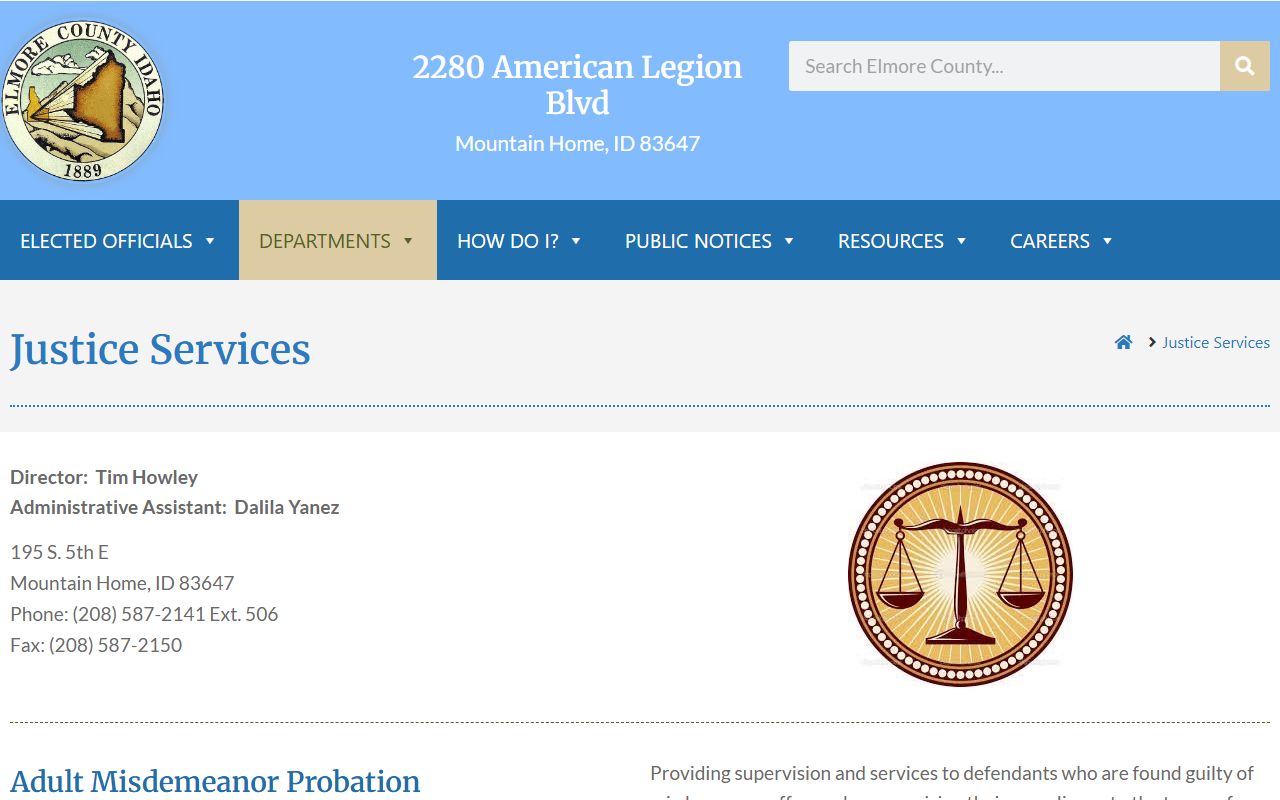
Justice Services is not the general docket office, but it shows how some criminal or DUI matters may involve court-supervised treatment tracks.
Elmore County District Court Table
Elmore County does not have numbered district courts in the way some states do. The required local court table is therefore organized by court office, judge, and function. All listed district and magistrate trial-court functions connect to the Elmore County District Court courthouse in Mountain Home, with different calendar contacts for district and magistrate work.
| Court / Office | Type | Address | Phone |
|---|---|---|---|
| Elmore County District Court | District and magistrate trial-court functions; case-record clerk contact | 150 South 4th East, Suite 5, Mountain Home, ID 83647 | (208) 587-2130 ext. 508 |
| District Judge Theodore Fleming | Felony criminal calendar; civil cases over $10,000; district law and motion | Elmore County District Court | Calendar: 208-587-2123 ext. 1217 |
| Magistrate Judge Brent Ferguson | Preliminary felony stages, misdemeanors, infractions, family, juvenile, probate, small claims, civil and special proceedings | Elmore County District Court | 208-587-2133 ext. 1292 |
| Magistrate Judge Brian Peterson | Resident magistrate chambers with the same broad magistrate categories | Elmore County District Court | 208-587-2133 ext. 1291 |
| Court Assistance Office | Civil self-help information and forms; not legal advice | 150 S. 4th E., Suite 4, Mountain Home, ID 83647 | (208) 587-1890 |
| Adult Drug & DUI Court / Justice Services | Treatment-court supervision for chemically dependent defendants | 125 S. 5th E., Mountain Home, ID 83647 | (208) 587-2130 ext. 282 |
District Court vs Magistrate Division
Idaho does not use a separate county court or justice court for Elmore County trial work. The useful comparison is District Court versus the Magistrate Division of the District Court. Both are part of Idaho's integrated trial-court system, but case assignments differ by subject, stage, and amount in controversy.
| District Court | Magistrate Division of the District Court | |
|---|---|---|
| Civil Cases | Civil actions over $10,000 and appeals from magistrate decisions. | Small claims, civil cases up to $10,000 by assignment, landlord/tenant, and related matters. |
| Criminal Cases | Felony criminal cases after preliminary stages. | Misdemeanors, warrants, initial appearances, bail settings, and felony preliminary examinations. |
| Family and Probate | District Court system authority, with many matters assigned to magistrates. | Divorce, custody, child support, probate, guardianship, conservatorship, juvenile, and protection orders. |
| Traffic | Not the ordinary traffic assignment. | All Idaho traffic violations are handled by the Magistrate Division. |
| Appeals | Appeals from District Court go to the Idaho Supreme Court, with possible assignment to the Court of Appeals. | Appeals from magistrate decisions may go to District Court. |
Elmore County District Court Case Flow
Case flow depends on the case type. Infractions, misdemeanors, small claims, family cases, juvenile cases, probate, and preliminary felony events usually begin in the Magistrate Division. Felonies move to District Court after initial appearance and probable-cause proceedings. Civil matters may begin or move based on amount, subject, assignment, and appeal posture.
That movement is important when reading a public case record. A felony may first show magistrate events for arrest, first appearance, bail, and preliminary hearing, then later show district-level arraignment and trial settings. A civil case may remain in a magistrate assignment if it is small claims or below the assignment threshold, while a higher-value claim or magistrate appeal belongs on the district side. The docket does not always explain the legal reason for the move, so the case type, judge, and event labels should be read together.
Criminal flow: Citation or arrest › Magistrate initial appearance › Bail or release terms › Preliminary hearing for felony matters › District Court arraignment for felony cases › Pretrial motions › Plea or trial › Judgment and sentence › Appeal.
Civil flow: Complaint or petition filed › Service and answer › Motions or case management › Settlement, hearing, or trial › Judgment or order › Post-judgment steps › Appeal if permitted.
Public case status, hearings, and dockets are searched through iCourt, while the Elmore County Clerk of the District Court handles copies and certified documents.
Elmore County District Court Divisions
Civil records can include complaints, answers, motions, affidavits, orders, judgments, hearing notices, and docket entries. District Court handles higher-value civil matters and appeals from magistrate decisions, while magistrate assignments include small claims, landlord/tenant matters, and civil cases under the assignment threshold. The Court Assistance Office can help self-represented parties with civil forms, but it cannot provide legal advice.
Criminal records may show charges, probable-cause events, initial appearances, bond, pleas, motions, orders, judgment, sentence, fines, costs, probation terms, and warrants when public. Family and probate records run through the same district court system, with many matters assigned to magistrates. Adoption, termination, juvenile, guardianship, conservatorship, and mental health records may include restricted information.
The District of Idaho ECF information page is a federal electronic filing source, not the state District Court docket for Elmore County.
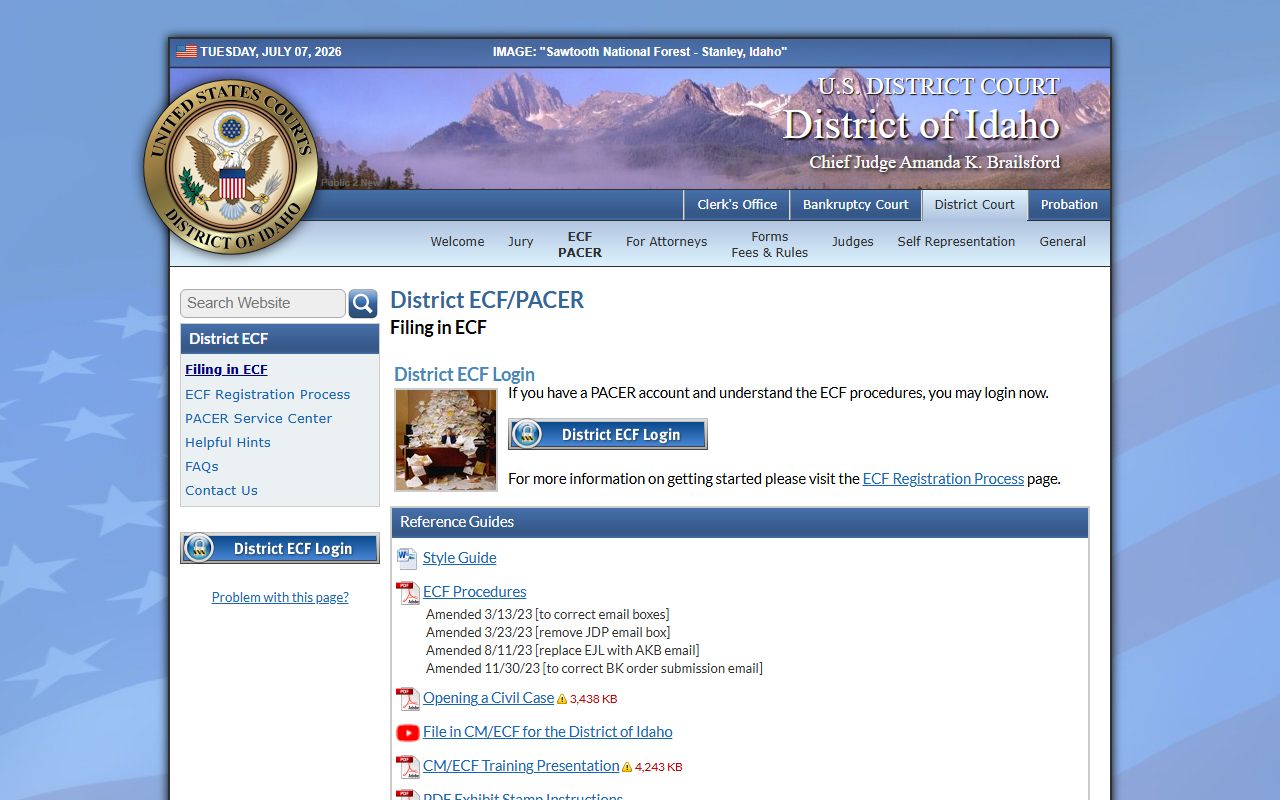
The distinction matters because federal ECF cannot provide a certified copy of an Elmore County District Court case file.
Fourth Judicial District and Appeals
Elmore County sits in the Fourth Judicial District. Regional district administration and some services are based in Ada County and Boise, but Elmore County has resident magistrate chambers and local courthouse operations. Appeals from magistrate decisions can go to District Court. Appeals from District Court judgments go to the Idaho Supreme Court, which may assign cases to the Idaho Court of Appeals.
The Fourth Judicial District connection also explains why district resources sometimes appear on regional court pages rather than only on the county site. Traffic, criminal, civil, and juvenile process materials for the Fourth Judicial District describe the same broad path used in Elmore County. Local records, however, remain tied to the Elmore County courthouse, the assigned judge or magistrate, and the Clerk of the District Court for copies and certified documents.
Federal appeals and federal trial records follow a different path. Elmore County federal matters are assigned to the U.S. District Court for the District of Idaho Southern Division in Boise, and appeals from that federal court go to the U.S. Court of Appeals for the Ninth Circuit.
The Ninth Circuit Court of Appeals is relevant only for federal District of Idaho appeals, not Idaho state District Court appeals.
State appeals from Elmore County District Court use Idaho appellate courts, while federal appeals use the Ninth Circuit route.
Magistrate Division in Elmore County
The Magistrate Division is not a separate county court. It is part of the District Court. In Elmore County, magistrate judges handle the high-volume matters many people first encounter: traffic and infractions, misdemeanor arraignment and trial, misdemeanor sentencing, warrants, initial felony appearances, felony preliminary examinations, small claims, evictions, divorce, custody, child support, probate, guardianship, conservatorship, juvenile proceedings, and protection orders.
Jury service and courthouse access have practical local rules. Elmore jurors serve one month, most are asked to report one to two times, and many trial dates are canceled or settled. County security rules prohibit firearms, dangerous weapons, explosives, incendiary devices, bags, backpacks, and purses in courthouse or annex spaces, and visitors may be subject to electronic and physical search.
The courthouse itself is also part of Elmore County's legal history. The Idaho State Historical Society and National Register materials describe the courthouse as a detached two-story public building over a raised basement, faced with Boise sandstone and retaining original interior features. For current court users, the historic setting matters less than the operational split: District Court and jury functions are at the courthouse, while general clerk and recorder public-services work also uses the American Legion Boulevard address.
The U.S. Bankruptcy Court for Idaho is a federal court serving the state, separate from Elmore County magistrate and district case files.
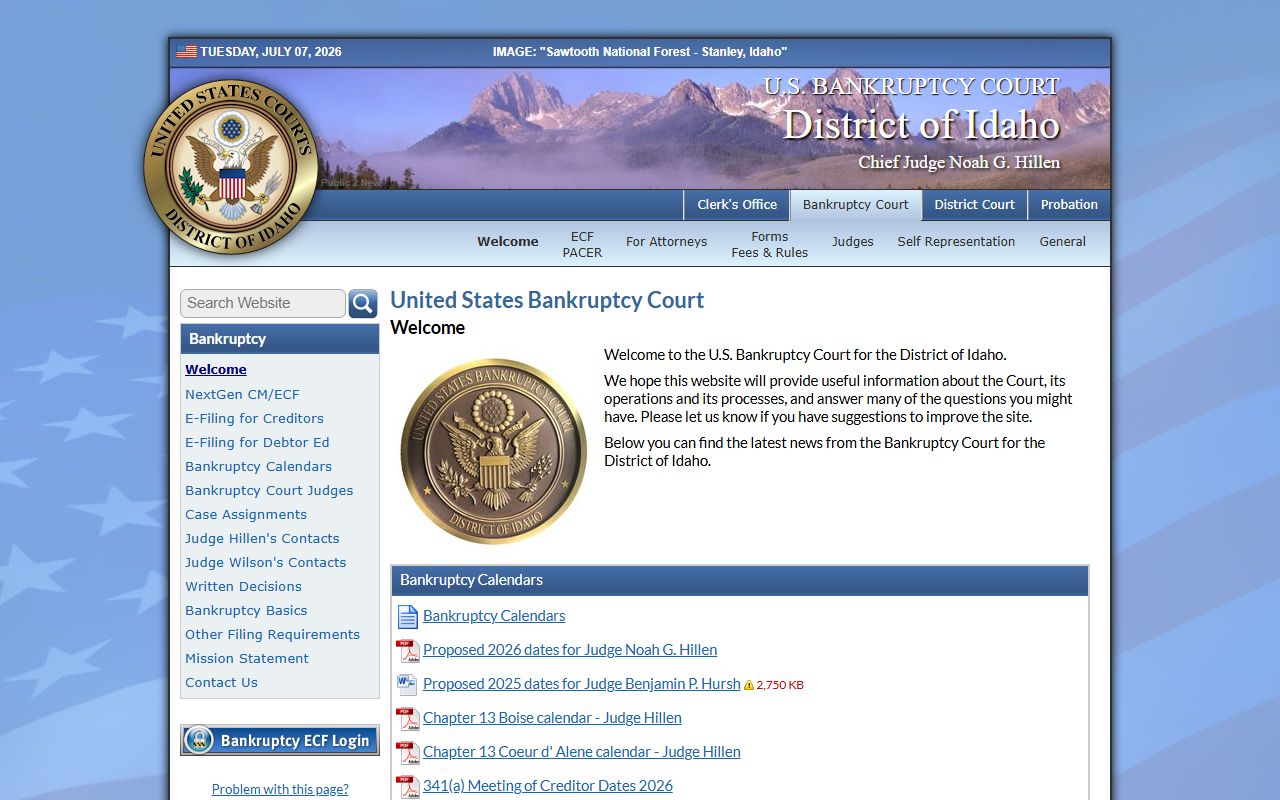
Bankruptcy records are federal records, so they should be searched through federal systems rather than the Elmore County District Court clerk.
The Bankruptcy CM/ECF system is another federal system outside Idaho state trial-court records.
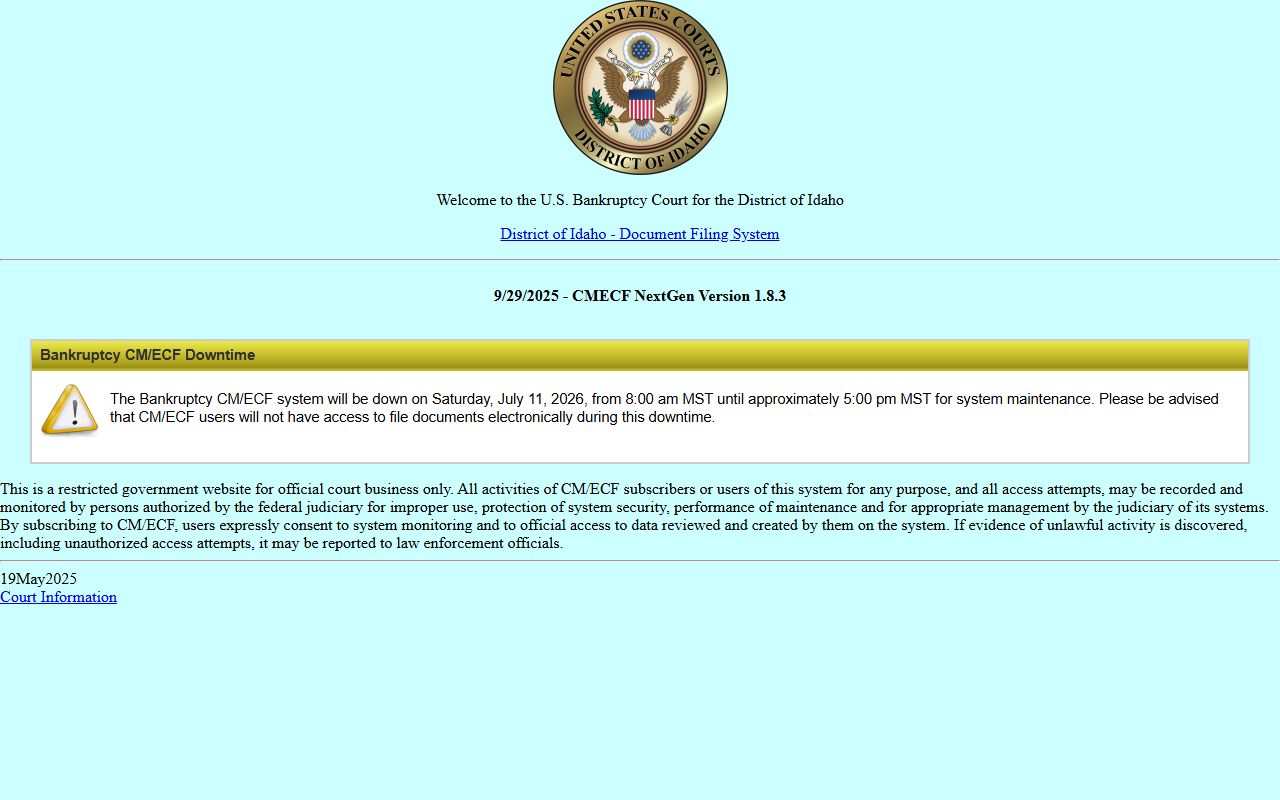
Knowing whether a case is state, federal district, or bankruptcy prevents searches from landing in the wrong court system.