
Elmore County Arrest Records and Court Charges
Arrest records and court charges are related, but they are held by different agencies and answer different questions. The Elmore County Sheriff's Office and Detention Center at 2255 East 8th North, Mountain Home, Idaho 83647, are the local law-enforcement and custody contacts. The sheriff records office handles public sheriff records requests when the record is not exempt. The court charge record begins in the Elmore County District Court system when a complaint, information, indictment, citation, or other charging document is filed and tracked by the clerk.
The sheriff page is the county source for law-enforcement contacts, and it is available at the Elmore County Sheriff page.
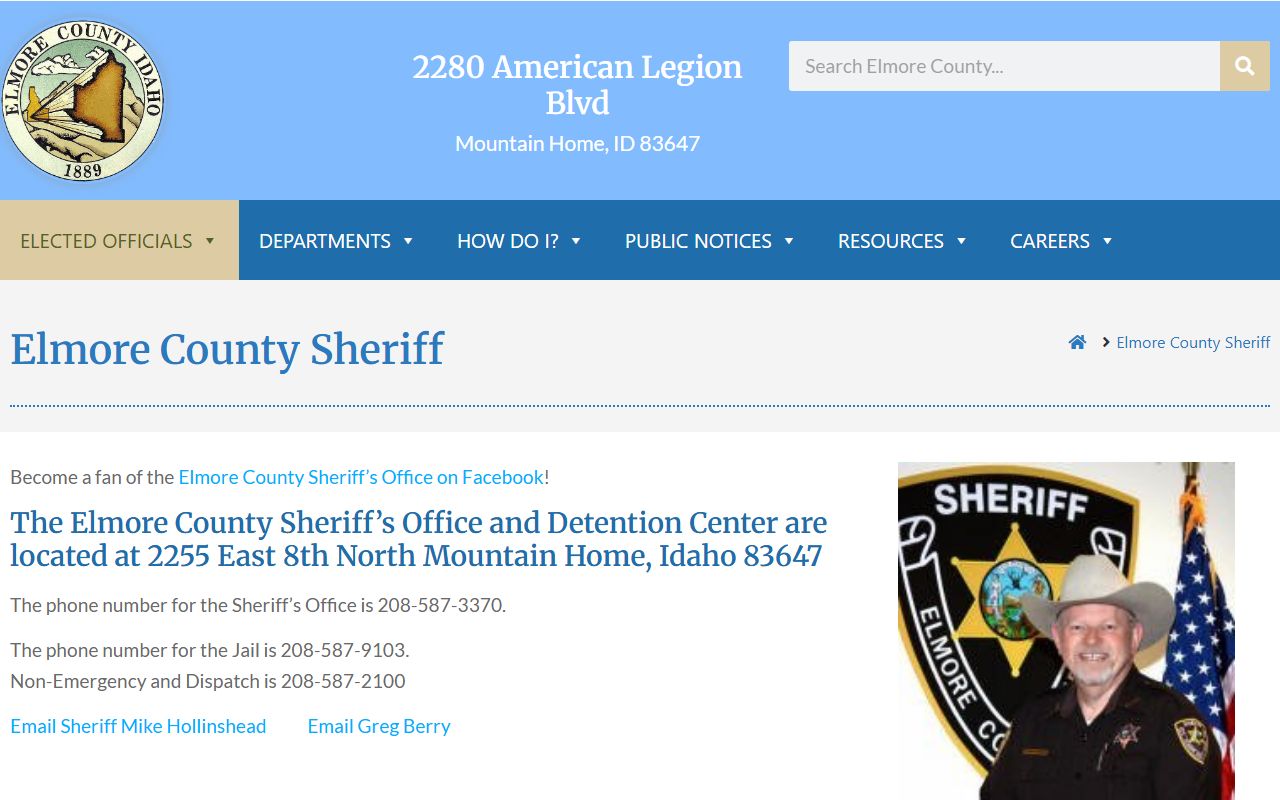
That sheriff contact source is important for arrest records because booking, incident, dispatch, and law-enforcement report records are not the same as the court's filed charge list.
After an arrest, the Elmore County Prosecuting Attorney reviews the facts and decides what charges to file, amend, dismiss, or prosecute. The prosecutor's office is led by Shondi Lott and is listed at the Elmore County Courthouse Annex, 190 South 4th East, Mountain Home, ID 83647, with phone 208.587.2130 ext. 503 and office hours of 8:30 a.m.-5:00 p.m. Monday-Friday. For the full case file after charges are filed, use the criminal court record, not only the arrest record.
How to Find Elmore County Arrest Records and Charges
Start with the question being asked. Current jail custody goes through the Elmore County Jail because the official roster is down and the county says to call the jail to verify current inmates. Sheriff reports or booking-related public records use the Sheriff's Office Records Request Form. Filed charges, charge status, court dates, pleas, and dispositions are searched through Idaho iCourt and the Elmore County Clerk of the District Court.
- For custody or booking status, call Elmore County Jail at 208-587-9103.
- For sheriff records, use the sheriff records request form and include case number, name, date of birth, incident type, and incident date when known.
- For court charges, open iCourt Smart Search and search by defendant name or case number.
- Filter by Elmore County when appropriate, then open the case result and review each charge line.
- Check whether each charge is pending, amended, dismissed, pled, sentenced, or otherwise disposed.
- Request certified charge documents, complaints, judgments, or docket copies from the Clerk of the District Court if the portal does not provide the document.
The sheriff records request PDF was a failed image capture in the manifest, but the official source is useful for the request process: Elmore County Sheriff's Office Records Request Form. The form says sheriff records are reviewed under Idaho public-record law, allows three business days for identification, review, analysis, and exemptions, and says the county will provide written notice if more time is needed.
How Charges Get Filed After an Arrest: Complaint, Information, and Indictment
The arrest record usually starts with law enforcement. The charge record starts when an accusation is placed into the court process. In Elmore County, misdemeanors and initial felony matters are handled through the Magistrate Division, while felonies move to the District Court after preliminary stages. A single arrest can produce no filed case, one charge, or several counts. Charges can also change as the prosecutor reviews evidence, negotiates pleas, or dismisses counts that cannot be supported.
| Charging Document | Filed By | Common Use | Record Effect |
|---|---|---|---|
| Complaint | Prosecutor or authorized charging authority | Misdemeanor cases and early felony proceedings | Begins the court charge record and appears in the criminal case file when public. |
| Information | Prosecutor | Felony prosecution after preliminary stages or waiver | Sets out the formal felony counts prosecuted in District Court. |
| Indictment | Grand jury process | Serious or grand-jury-reviewed criminal matters | Creates formal charges that may include restricted grand-jury materials. |
| Citation | Law-enforcement officer | Traffic, infraction, or misdemeanor matters | May open a court case and require appearance or payment depending on charge type. |
Charge Status and What It Means
Charge status is not static. A charge may be filed at booking or first appearance, then amended, reduced, dismissed, or resolved separately from other counts. iCourt can show public case events, but a certified copy of a complaint, amended information, dismissal order, judgment, or sentence should be requested from the clerk when exact language matters.
| Status | What It Means |
|---|---|
| Pending | The charge has not reached final disposition, or the public docket still shows it as open. |
| Amended | The original count was changed, often to a different statute, level, wording, or charging document. |
| Reduced | The charge was lowered in severity or changed as part of court proceedings or plea resolution. |
| Dismissed | The court record shows the count or case was dismissed. Read whether dismissal applies to one count or the whole case. |
| Pled or sentenced | The charge has a plea or judgment and may include jail, probation, fines, costs, restitution, or other terms. |
The Mountain Home Police Department is a separate city source for city police records, and its official information is published at the Mountain Home Police Department page.
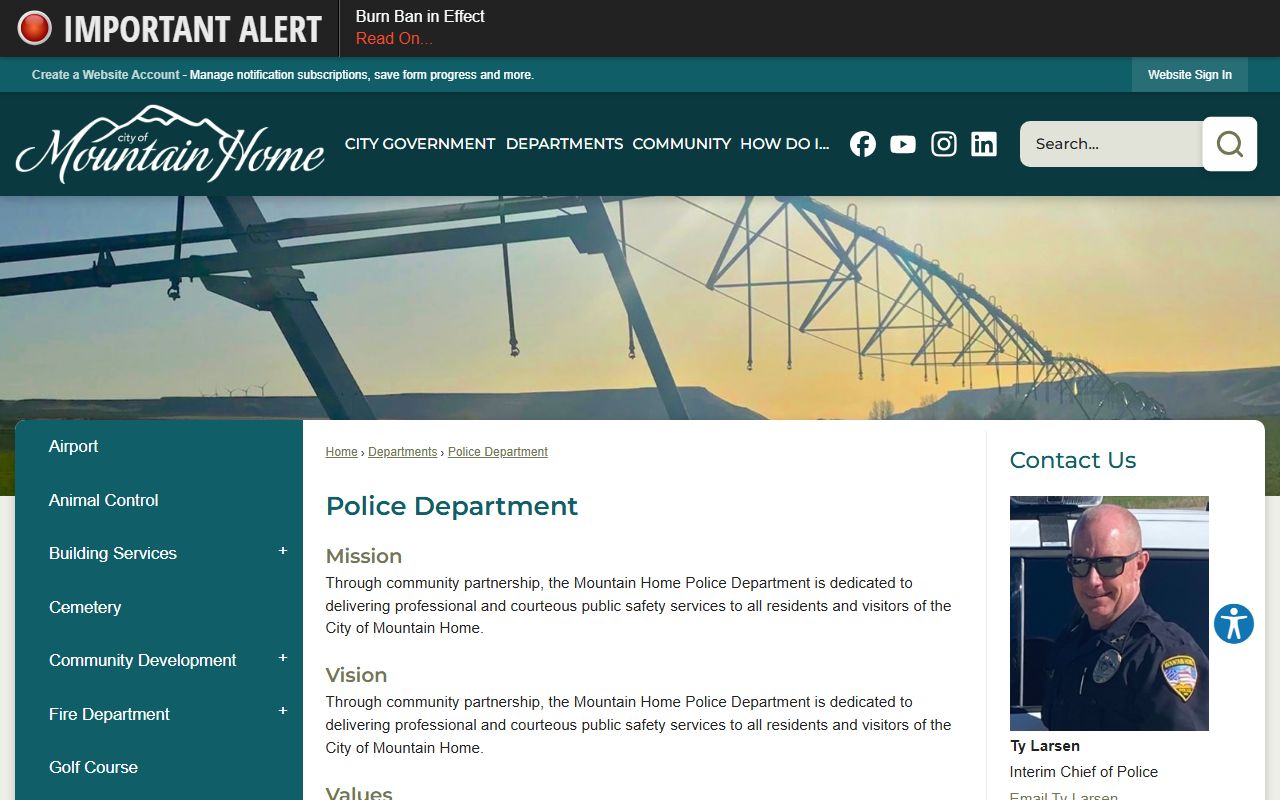
City police records can explain the arrest or incident source, but custody status and court charge status still require the jail or court access channels.
Charges vs. Convictions
Being charged is not the same as being convicted. An arrest record can exist without a conviction, and a filed court charge can be dismissed, amended, or resolved differently from the original accusation. When reading Elmore County arrest records and charges, the safest reading is to treat the arrest as law-enforcement activity, the charge as a court accusation, and the conviction as a final outcome only when the docket, judgment, or sentence supports it.
| Charge | Conviction | |
|---|---|---|
| Meaning | Formal accusation filed or pursued after arrest or citation. | Final guilty result by plea, verdict, or judgment. |
| Where to verify | Complaint, information, citation, docket, or charge list. | Disposition, judgment, sentence, and clerk-certified documents. |
| Possible public status | Pending, amended, dismissed, reduced, or sentenced. | Shows after a conviction event and sentencing entry when public. |
Sealed vs. Expunged Records
Idaho access rules include sealed, shielded, redacted, juvenile, and other restricted records. A dismissed charge may still appear in a court history unless the record is sealed, shielded, or affected by a specific order or statute. Idaho Code 19-2604 can affect some criminal case visibility or status, while juvenile access is restricted under Idaho Code 20-525. The Elmore records request form also asks for a reason and relationship when someone requests exempt, sealed, or confidential records.
| Sealed or Shielded | Expunged or Relief Order | |
|---|---|---|
| Public visibility | Limited from ordinary public lookup or withheld by the clerk. | Depends on the Idaho statute and the exact order entered. |
| Who decides | The court applies ICAR 32, statute, and court orders. | The court decides whether statutory relief is available. |
| Practical note | Absence from iCourt does not prove no arrest or case exists. | Do not assume dismissal automatically removes every public reference. |
Charge Codes and Severity Levels
Charge records may identify a statute, offense description, level, filing agency, bond, first appearance, and status. Idaho distinguishes infractions, misdemeanors, and felonies. Infractions are not crimes and carry no jail time. Misdemeanor traffic and misdemeanor criminal cases are generally handled in the Magistrate Division. Felony cases begin with initial magistrate stages and then move to District Court after preliminary proceedings. One arrest can produce several separate charges, and each count can have a different disposition.
The Idaho State Police sex offender registry is not a charge lookup or jail roster, but it is an official state public-safety database for registrants and appears in the research as a separate channel. The registry search is available at the Idaho State Police sex offender registry search.
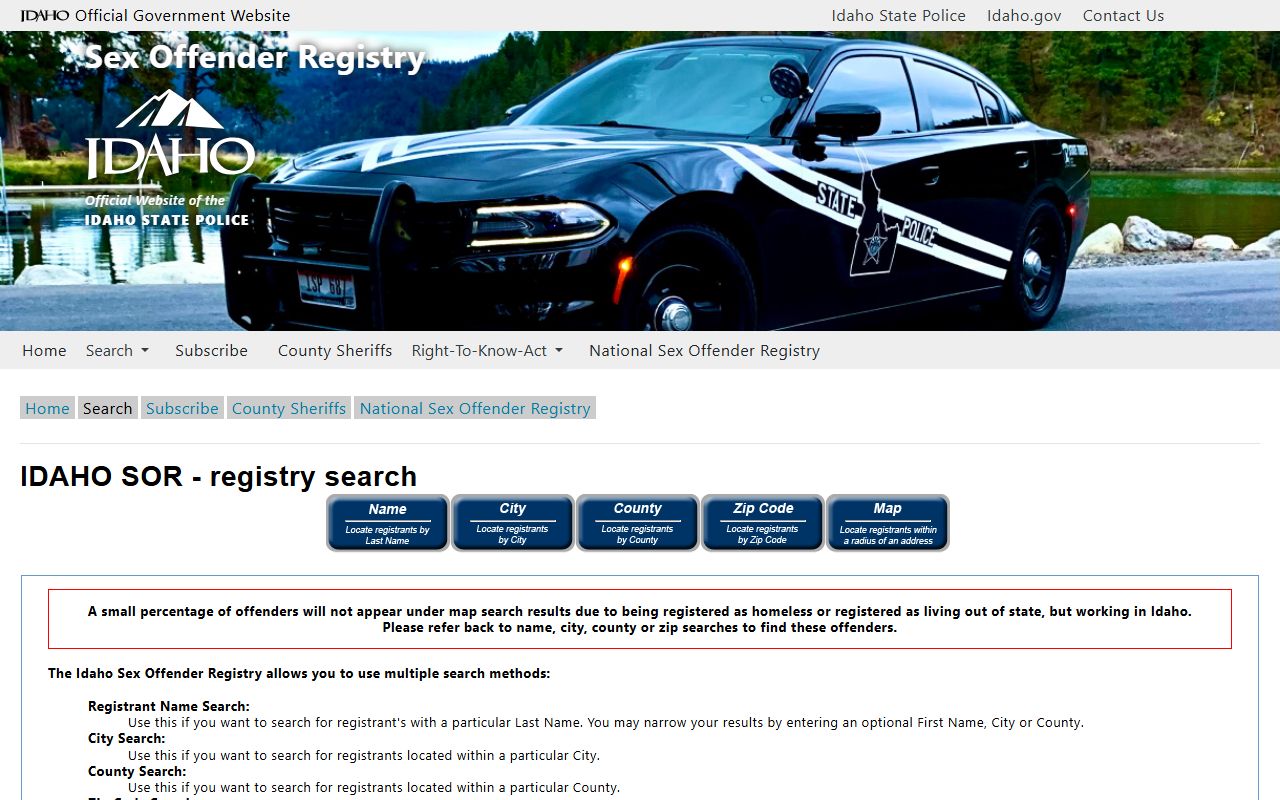
Use the registry only for registration status. It should not be treated as a complete arrest record, charge history, or current custody list.
County-level registry contacts are also published by Idaho State Police at the Idaho sex offender registry county contacts page.
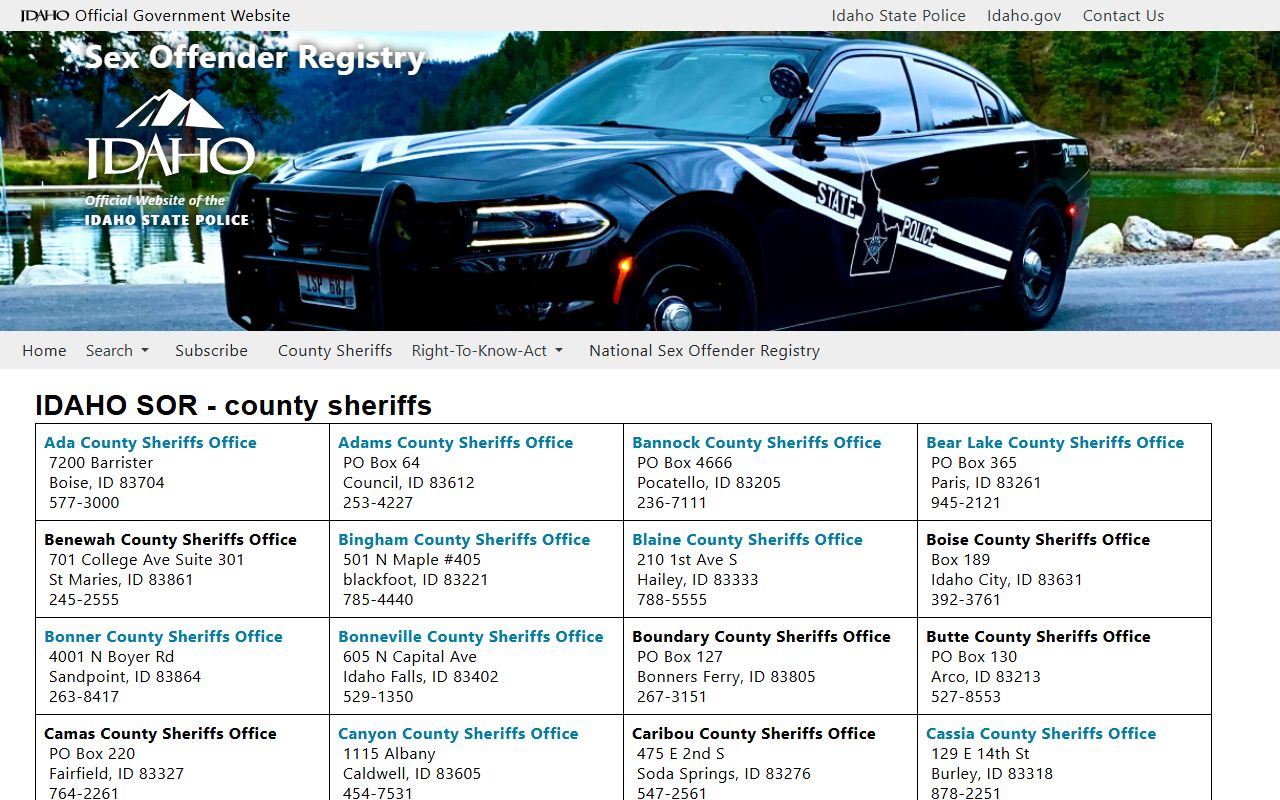
Those contacts help separate registry administration from court charge records and sheriff booking records.
Statewide Charge and Criminal History Lookups
Statewide court case searching runs through iCourt, while custody under Idaho Department of Correction runs through the IDOC Resident/Client Search. IDOC can show people in custody, in community supervision, discharged status, or Active Bench Warrant status for those under IDOC jurisdiction, but it is not a county arrest-record database. For public sheriff records, use the Elmore sheriff records request. For formal court charge status, use iCourt and the Clerk of the District Court.
Mountain Home also offers a public-record request portal for city records, and the official portal is available at the Mountain Home public records request page.
That city request channel can matter when a Mountain Home police incident led to an arrest, but court charges still need to be checked in the state court system.
Background Check Considerations
Arrest and charge data can be incomplete if a record is sealed, restricted, redacted, delayed, held by another agency, or never resulted in filed court charges. Public lookups should not be used as employment, tenant, credit, insurance, or licensing background checks unless the process complies with the law that governs that use. For official copies, request records from the source agency: sheriff for public sheriff records and booking/report records, court clerk for charge documents and judgments, and state systems for state-specific records.
Important: Public arrest and charge lookups are not FCRA consumer reports and must be verified with the originating agency.
Restricted Charge Records in Elmore County
Juvenile charges, sealed records, shielded cases, unreturned warrant materials, grand-jury records, pre-sentence reports, pretrial risk assessments, personal identifiers, and some active investigative materials may be withheld or redacted. Idaho Court Administrative Rule 32 controls judicial records, while Idaho's Public Records Act applies to many non-judicial sheriff or city records. If a charge record is missing from public search, use the case number, agency, date, and subject name to ask the correct office whether the record is public, sealed, restricted, retained, or held by another agency.